
Looking for technical soccer development in Camden? Join our May-December training block. Master your touch with GP Soccer Elite.

Discover how GP Soccer Elite Training bridges the gap between recreational play and technical mastery for youth athletes in Kingsland and St. Marys.
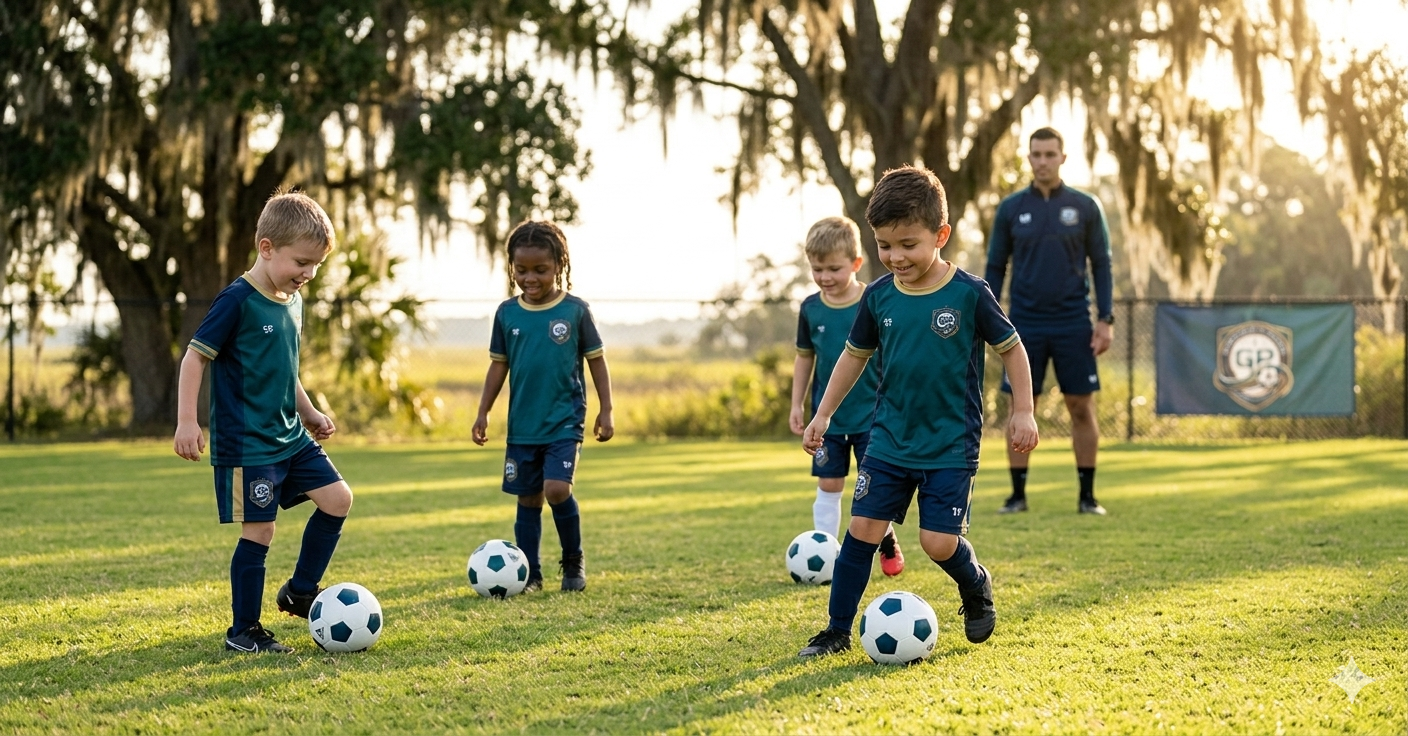
Elevate your athlete’s game with elite technical soccer training in Camden County. We bridge the gap between rec play and ball mastery. Register for elite skills sessions in Kingsland and St. Marys, GA.

Navigating the Alphabet Soup: A Parent’s Guide to Boys’ Youth Soccer Leagues Choosing the right soccer environment for your son can feel like navigating a maze of conflicting advice, regional differences, and an exhausting "alphabet soup" of league acronyms. You’ll hear other parents whispering about ECNL, bragging about MLS NEXT, or contentedly discussing their local recreational league. But what do these letters actually mean for your child? This guide is designed to demystify the landscape of American boys' youth soccer, helping you understand where your son fits now, where he might go in the future, and how to make the best decision for his happiness and development. Understanding the "Why" Before the "What" Before diving into specific leagues, it’s crucial to understand that there is no single "best" league . The best league for your son is the one that matches his current skill level, commitment, and goals. A talented player who loves soccer but wants to play other sports or focus heavily on academics may be miserable (and burn out) in a top-tier national league. Conversely, a player who dreams of playing professionally will need the exposure and training found only at the top of the pyramid. The U.S. Boys’ Soccer Pyramid: The Hierarchy Explained To visualize how these leagues relate to one another, think of them as a pyramid. The base is the widest, with the most players and the lowest commitment/cost. As you move up, the number of players decreases, the competition increases, and the demands on your time and wallet grow significantly. Here is a breakdown of the pyramid for boys' youth soccer as it stands today.

The Roadmap to Success: A Parent’s Guide to Girls’ Youth Soccer Leagues

The "Filter" Statistics: How Many Make It? According to data from the NCAA and major youth organizations, the chances of playing at the next level are highly dependent on the league "platform." General Probability High School to NCAA (Overall): Only 5.7% of high school boys and 7.2% of high school girls go on to play for an NCAA institution (DI, DII, or DIII). The "Elite" Advantage: If a player is on an ECNL or MLS NEXT/GA roster, that probability jumps significantly. For example, over 90% of ECNL Girls players traditionally go on to play some level of college soccer. College Commitment by League (Estimated) The following table shows the "recruitment weight" of each league. This represents where college coaches spend their limited travel budgets to scout.